Project record · Palembang, South Sumatra, Indonesia · Waste-to-energy · October 2026
A 1,000-tonne-per-day waste-to-energy plant in Palembang, South Sumatra, has completed its 72+24-hour full-load trial run and moved into the final commissioning phase before commercial operation. Eacoon supplied the complete waste-to-energy burner system for the plant’s mechanical grate incinerator — the start-up burner and the auxiliary burner — engineered for a corrosive equatorial coastal site and for dual-fuel operation on light diesel and biomass palm oil.
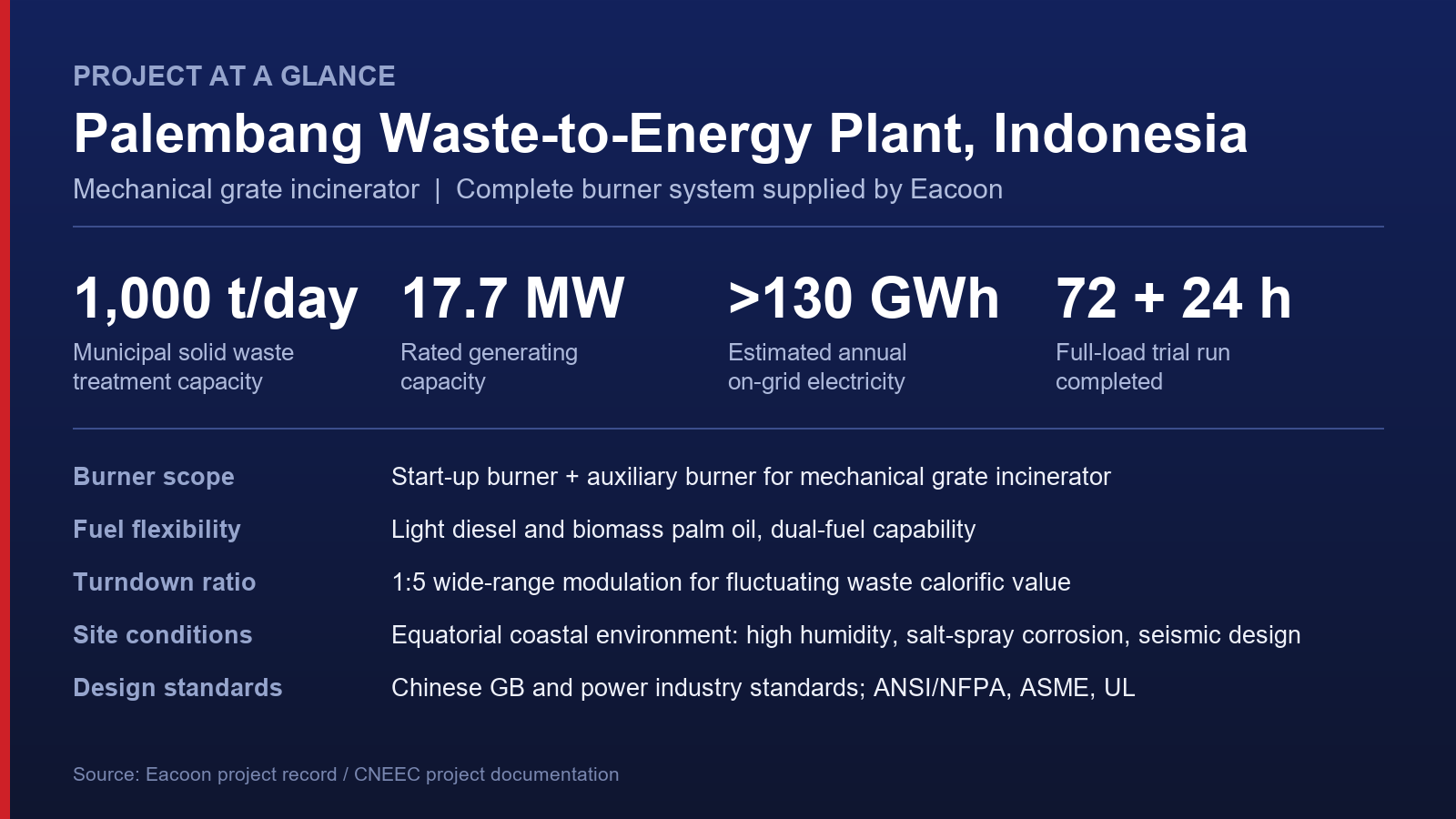
Palembang waste-to-energy plant — project parameters and burner scope.
The Palembang facility is a benchmark waste-to-energy project developed under an Indonesian presidential decree and built by a Chinese EPC contractor. The plant is designed and constructed to Chinese standards, processes 1,000 tonnes of municipal solid waste per day, and is expected to supply more than 130 million kWh of electricity to the grid each year once in commercial operation.
For the waste-to-energy burner system, the significance is not the headline capacity but the operating range. The combustion train has to hold the furnace at process temperature across the full spread of waste quality the city actually delivers — not the calorific value assumed on the datasheet.
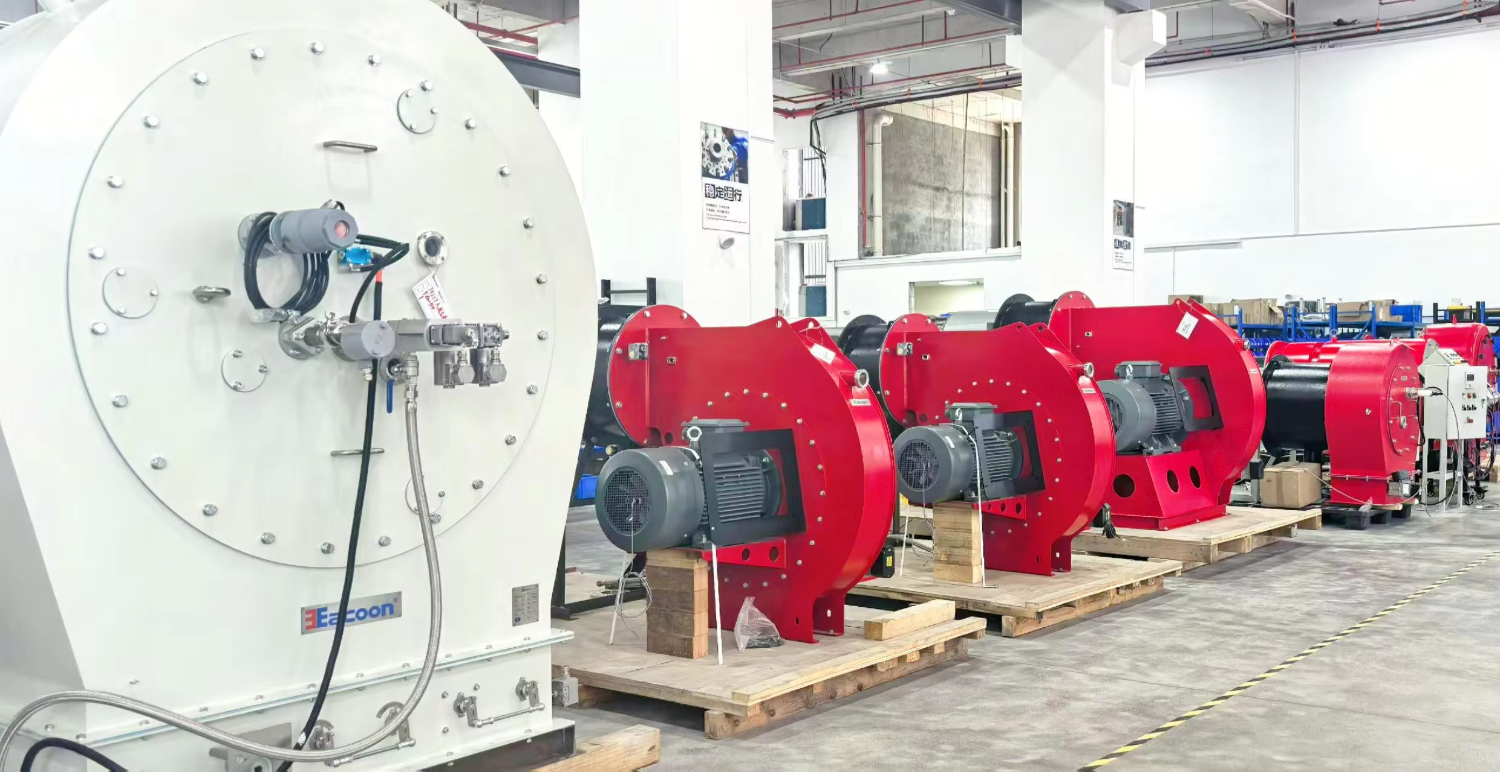
Site conditions and the acceptance regime shaped the burner design more than nominal thermal capacity did. Six requirements drove the technical route:
High ambient temperature and humidity year-round, with severe salt-spray corrosion. The equipment also had to satisfy a seismic design requirement for intensity 8.
The combustion system had to run on light diesel and on biomass palm oil without changing the burner front.
The auxiliary burner carries a large share of the heat input, yet must modulate down to one fifth of maximum output because the calorific value of incoming waste swings widely.
With the furnace held at high temperature for long periods, flame stability at the burner throat and resistance to slag build-up become continuous operating requirements, not start-up concerns.
Chinese national standards and power-industry standards applied alongside ANSI/NFPA, ASME and UL, with strict performance acceptance tests written into the contract.
Export packing, ocean freight and on-site commissioning support had to be sequenced so that installation and first fire were not gated by logistics.
Eacoon supplied the waste-to-energy burner system matched to the mechanical grate incinerator: a start-up burner for cold furnace bake-out, ignition and heat-up, and an auxiliary burner for maintaining furnace temperature when the waste feed falls below design calorific value.
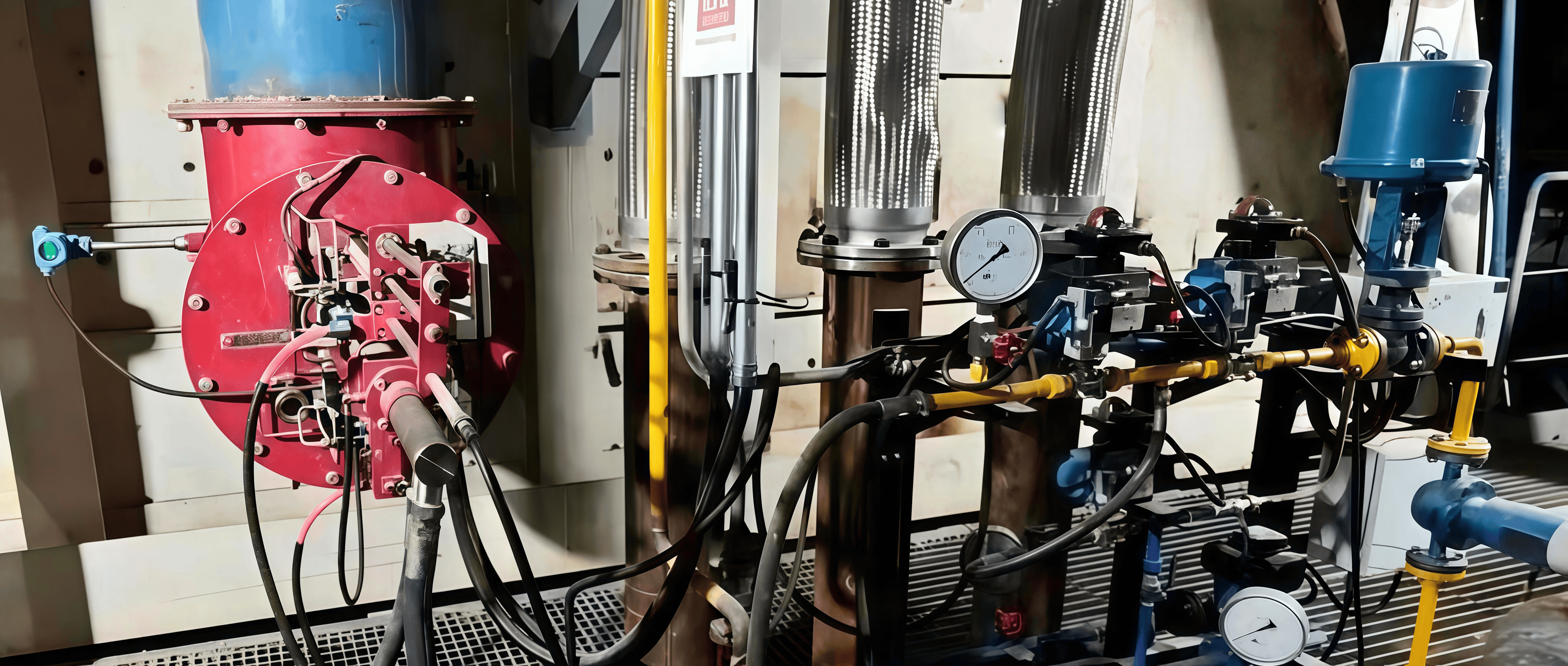
Burner front and fuel train installed on site. Photo: CNEEC.
Three design decisions carried most of the project risk:
Corrosion and seismic qualification. Burner components, air ducting and the fuel train were specified for salt-spray exposure and for seismic loading, rather than relying on site-built protection after delivery.
Dual-fuel flexibility. The same burner handles light diesel and biomass palm oil, so the plant can follow fuel availability and price without a hardware change.
Wide-range modulation. A 1:5 turndown lets the auxiliary burner follow the real heat balance of the furnace — from cold bake-out at the low end to full support during a calorific-value collapse at the high end, with a stable flame throughout.
The operating duty is deliberate: keep the furnace inside the process temperature band in every condition, including the moments when the waste feed is wet, low in calorific value, or interrupted. That is also the basis of dioxin control — formation is suppressed by holding temperature and gas residence time, and by avoiding the cold pockets that appear when combustion support is lost.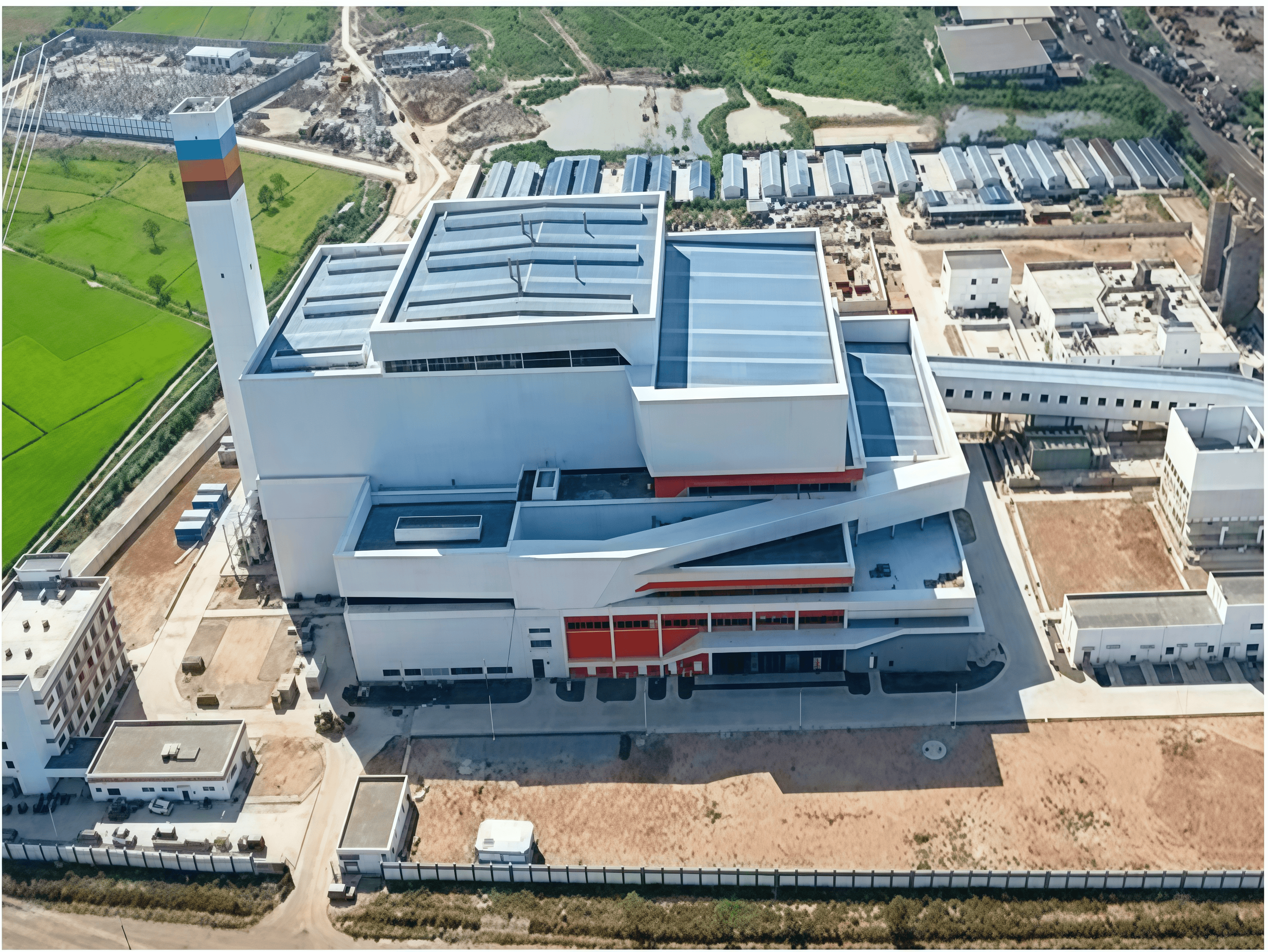
Waste-to-Energy Burner System, Palembang Indonesia
The waste-to-energy burner system operated through the whole commissioning sequence: reverse power transmission, unit grid synchronisation, multi-condition load rejection tests, and the 72+24-hour full-load trial run. Across those steps the combustion system ran stably, and the measured indicators met both the contract performance guarantees and the local environmental emission requirements.
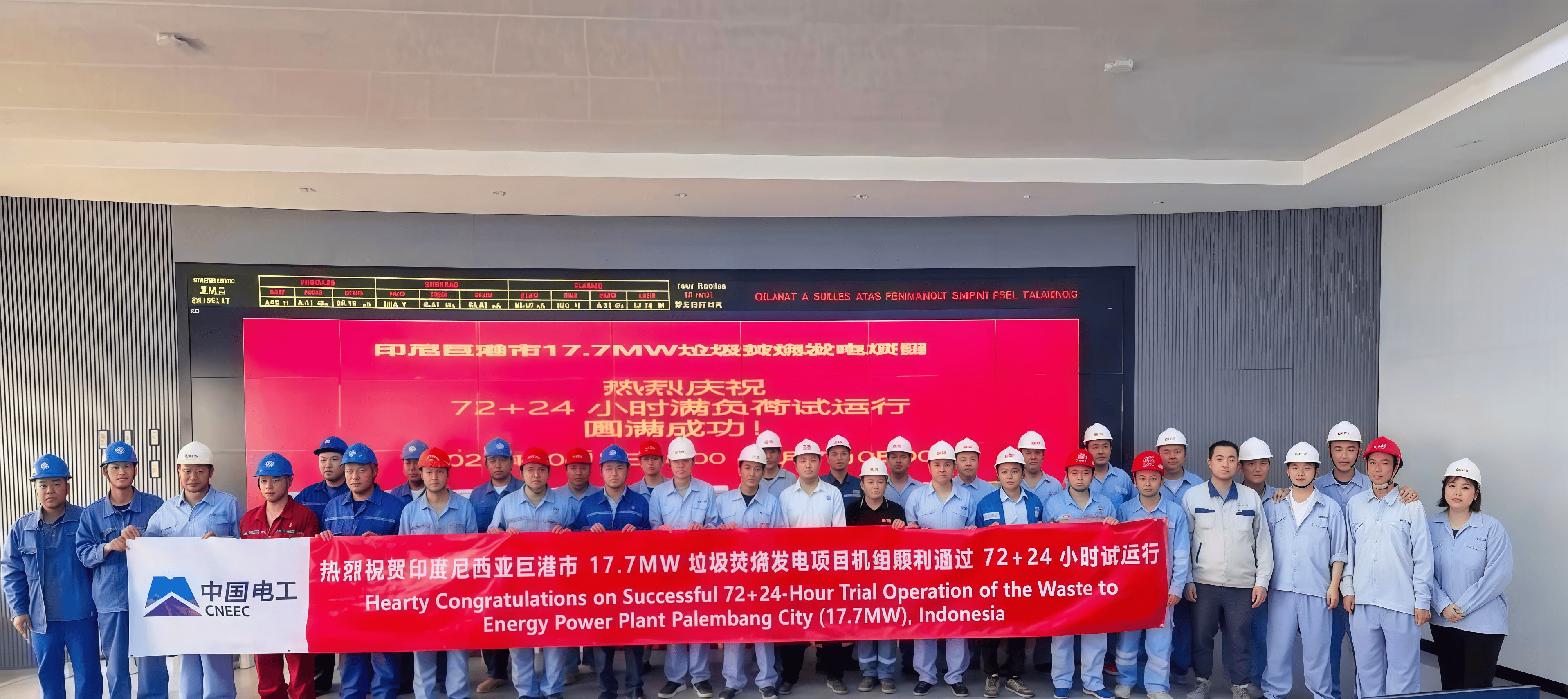
72+24-hour full-load trial operation completed at the Palembang 17.7 MW waste-to-energy unit. Photo: CNEEC.
Load rejection deserves separate mention. It is the step where a burner system either holds the furnace or loses it: the unit trips, heat input collapses, and the auxiliary burner has to recover temperature before the refractory and the grate are exposed to a thermal transient. Passing that test repeatedly, at different loads, says more about turndown and flame stability than any datasheet figure.
Eacoon has worked in industrial combustion and solid-waste incineration equipment for more than twenty years, with in-house R&D and core patents, and takes part in the drafting and revision of industry group standards. Several of its waste-incineration burner series hold type-test certificates, and the designs have been proven in sustained field operation rather than only in factory testing.
The reference base includes municipal and industrial solid-waste plants across east, south, northeast and northwest China — including high-altitude installations in Tibet — and exported projects in Vietnam, Thailand, Indonesia and Uzbekistan. Equipment has been supplied to solid-waste operators including SUS Environment, Grandblue Environment and CECEP. The scope offered covers both new-build incinerators and retrofit or capacity upgrades of existing furnaces.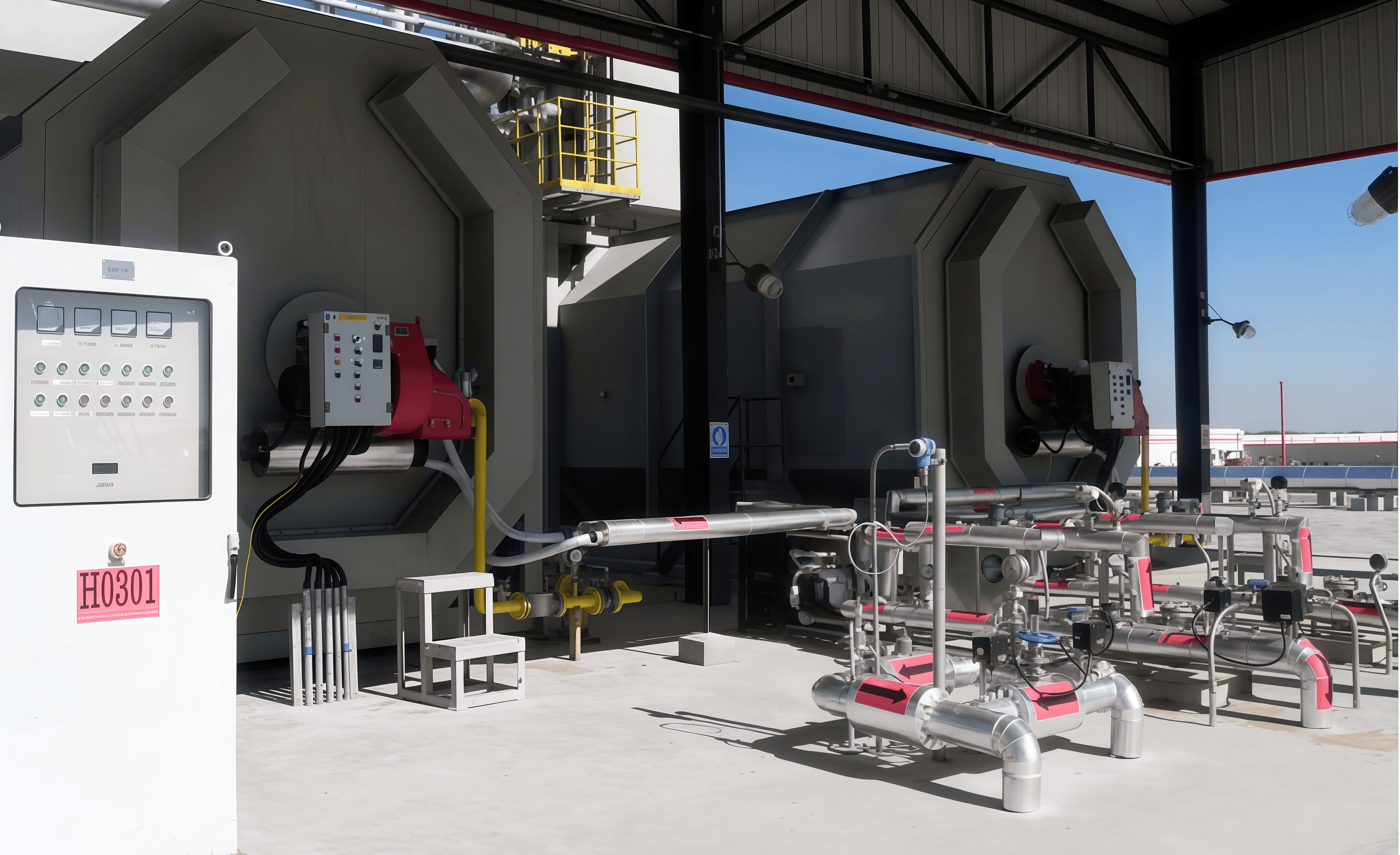
Industrial Combustion and Solid-Waste Incineration Equipment
Four questions decide whether a burner system survives its first year of operation, and all four appeared in this specification:
A 1:5 ratio is only useful if the burner holds a stable flame at the bottom of the range, where atomisation and flame detection are hardest.
Switching between diesel and palm oil should not require a burner rebuild, and both fuels must meet the same emission limits.
In coastal equatorial climates, salt-spray duty belongs in the material and coating specification from the start.
Plants built to Chinese standards but financed or insured internationally are commonly asked for ANSI/NFPA, ASME or UL documentation as well. Confirming the document set early avoids re-testing.
Send us your furnace type, waste calorific-value range, fuel options and target emission limits. We will come back with a burner configuration and a scope list.
Tel: +86 139 2888 4373 | Email: Sales@eacoon-burner.com

