Project record · Lanzhou, Gansu, China · Molecular-sieve catalyst roasting · October 2026
A molecular-sieve catalyst plant in Xigu, Lanzhou, has replaced the manual-ignition burners on all four of its roasting furnaces with automatic low-NOx burner systems. Eacoon supplied and commissioned 60 FN0075 low-NOx burners at 150 kW each — 2,250 kW installed per furnace, 9,000 kW across the line — together with 60 branch gas valve trains, four main gas skids, the combustion-air pipework, per-burner UV flame supervision and the explosion-proof PLC cabinets that now carry ignition, purge, leak test and safety interlock for every furnace.
The contract commits the low-NOx burner retrofit to NOx ≤80 mg/Nm³ at 3% O2, with EN 746-2 as the safety basis, while leaving product mix and plant capacity unchanged.
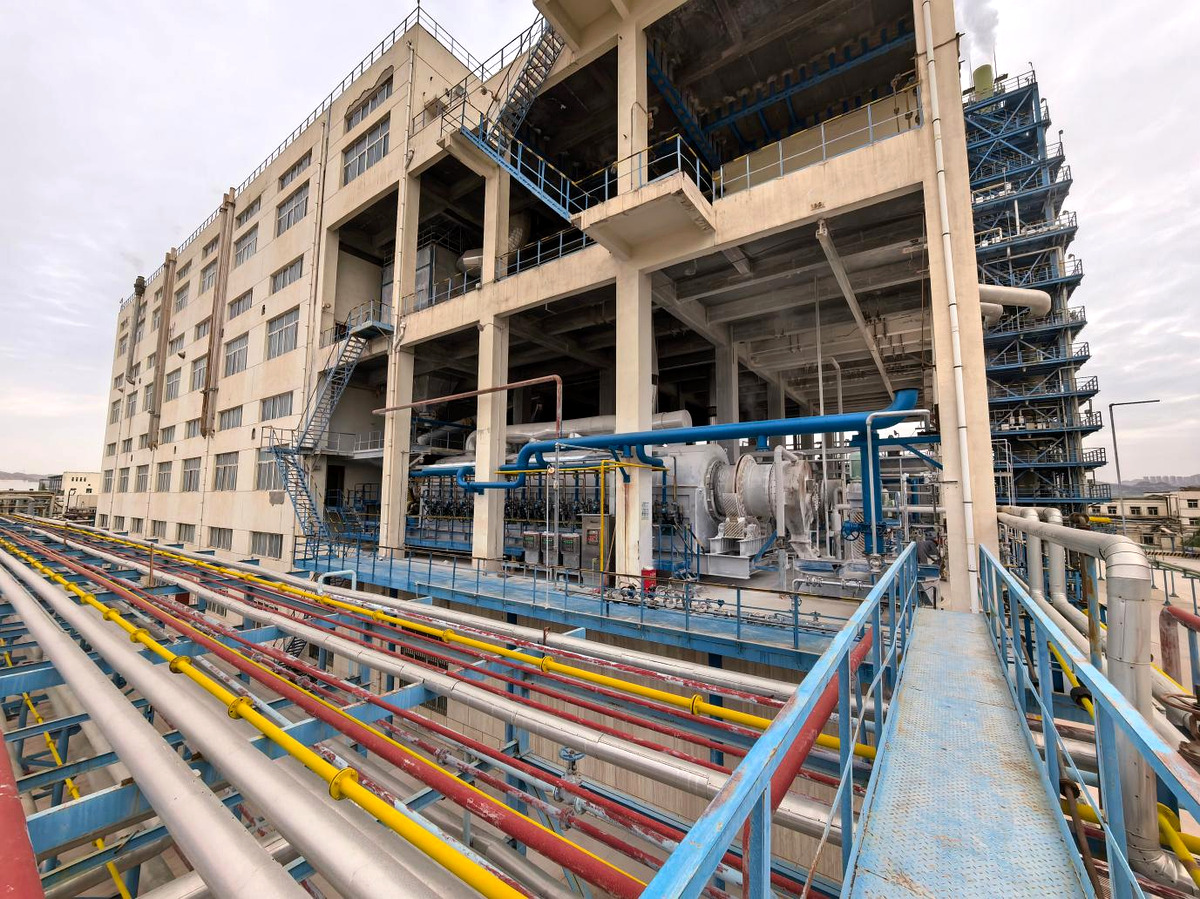 Burner row, branch gas trains and local control cabinets on the roasting furnace line. Photo: Eacoon.
1. Each furnace in the low-NOx burner retrofit went through the same sequence: air purge, gas-train leak test, pilot-free electrode ignition of individual burners, group ignition from the local cabinet, then loop tuning at part load and full load. The six loops per furnace were tuned against their own measuring points so that the two loops inside a zone do not hunt against each other, and the ±5 °C band was checked at holding temperature rather than only at heat-up.
2. Emissions were read live from the tail-gas monitoring page of the plant DCS on 26 October 2026: nitrogen oxides 4.64 mg/Nm³, particulates 2.98 mg/Nm³ and sulphur dioxide at the detection floor, against contractual limits of 80, 20 and 50 mg/Nm³. The same screen logged 18.5% oxygen, 4.8% humidity and 36,612 m³/h gas flow at the measuring point during the commissioning stage — roughly one-seventeenth of the NOx limit at a point where the furnace was still well below full load.
3. The engineering difficulty was not the 150 kW unit size. It was the number of small decisions the system has to get right at the same time — sixty burners, six control loops per furnace, one PLC cabinet per furnace, a ±5 °C control band, and a safety chain that has to be defensible under a European furnace-safety standard rather than local practice.
 60 low-NOx burners and their individual gas valve trains installed along the furnace side wall. Photo: Eacoon.
The scope was delivered as four complete burner systems — one per furnace — each comprising 15 low-NOx burners with matched nozzle bricks, a main gas valve skid (manual ball valve, filter, regulator, low/high pressure switches, pressure transmitter, over-pressure relief, two explosion-proof shut-off valves, leak-test switch and solenoid, turbine flow meter), 15 branch trains (ball valve, explosion-proof solenoid, electronic ratio valve, fine-adjust valve, flexible connector), the combustion-air train with one forced-draft fan per furnace and 15 electric butterfly valves, and two local control cabinets plus one PLC cabinet per furnace.
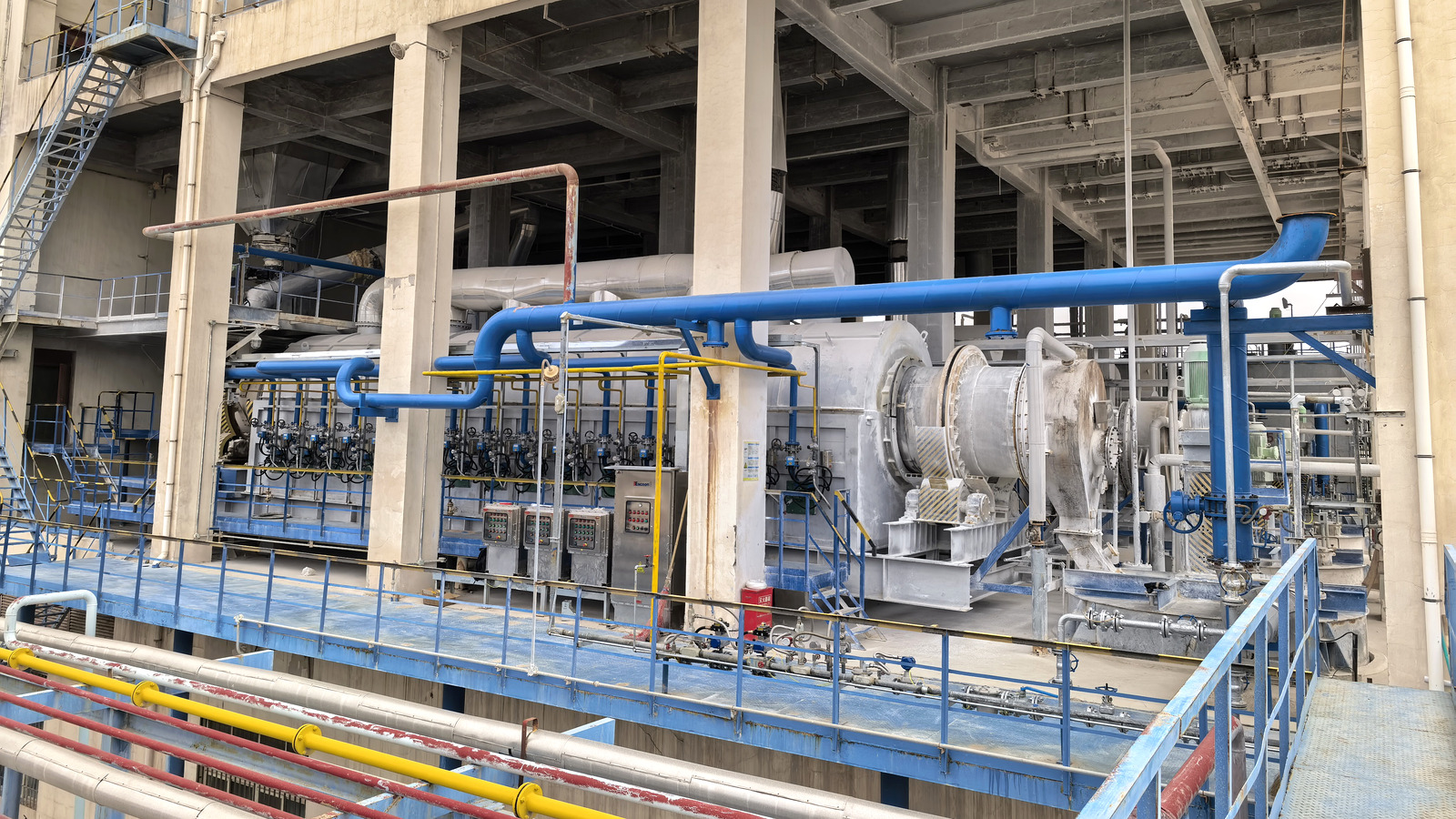 Roasting furnace line at the Xigu plant; the retrofit stayed inside the existing shell and brickwork outline. Photo: Eacoon.
Three design decisions carried most of the project risk:
Staged nozzle-mix combustion with internal flue-gas recirculation. Gas and air stay separate until the nozzle exit, so there is no premixed volume to flash back into, and the staged orifices plus the burner-quarry throat pull furnace gas back into the flame root. Peak flame temperature comes down, which is where thermal NOx is actually made — no external recirculation fan, no ductwork, no condensate.
Electronic ratio control instead of mechanical linkage. Gas and air are trimmed together against furnace temperature from the DCS, holding the excess-air ratio across the full 1:10 range. At 150 kW that means stable firing down to 15 kW without cycling the burner on and off, which is what protects the ±5 °C band during hold periods.
Pre-fabricated, pre-tested trains. Every valve train was assembled, leak-tested and painted before shipment; the site work was bolting flanges, pulling the 2,400 m signal cable and terminating into the marshalling box.
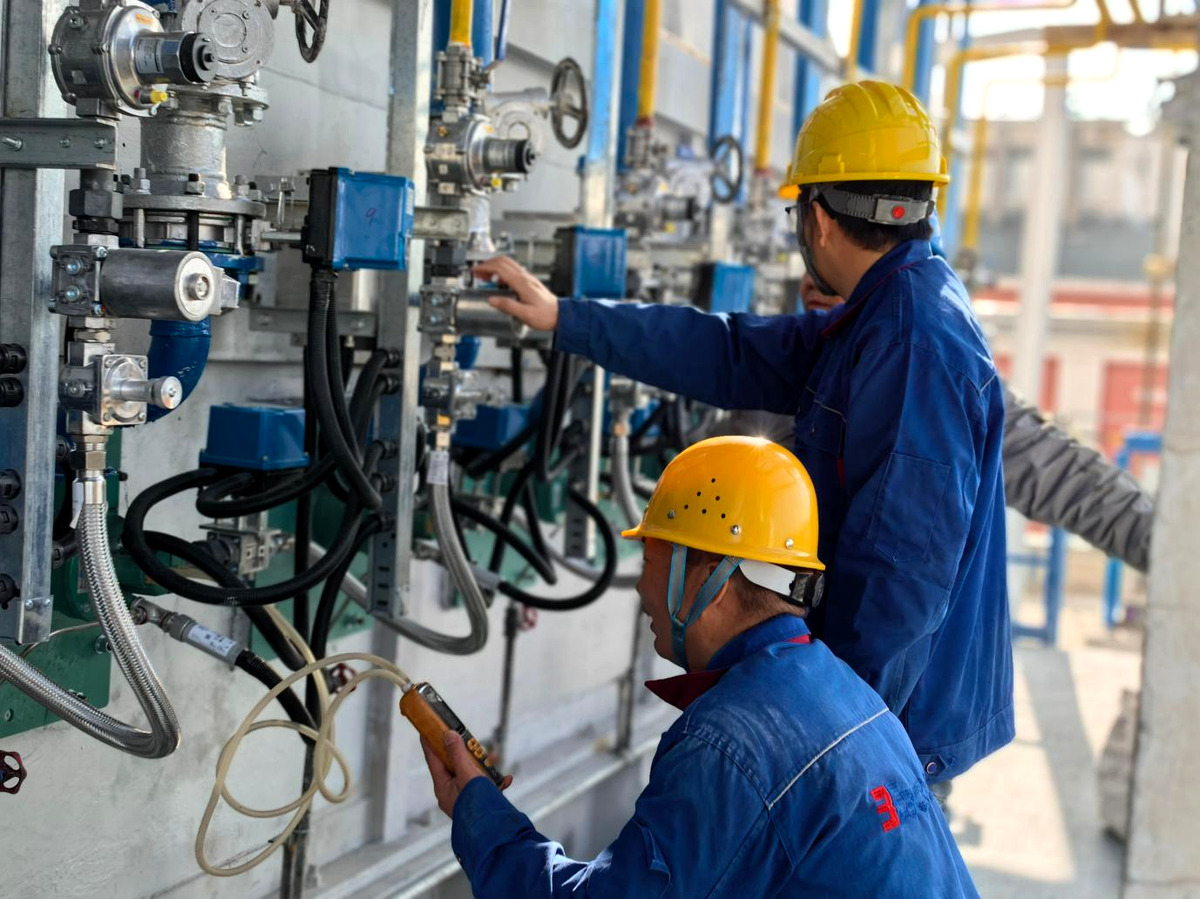
Ratio valve adjustment during commissioning. Photo: Eacoon.
Eacoon has worked in industrial combustion for more than twenty years, with in-house R&D and core patents, and takes part in the drafting and revision of industry group standards. The FN0075 used here is a nozzle-mix, staged-combustion burner rated below 30 ppm NOx at 3% O2 on natural gas; for this project it is set to a 1:10 turndown — 150 kW down to 15 kW — to match the furnace’s actual load profile with margin.
The reference base covers metallurgy, heat treatment, non-ferrous melting and building-materials furnaces as well as solid-waste incineration, in China and on export projects. The scope offered covers new-build furnaces and burner retrofit or capacity upgrades of existing furnaces — including, as here, retrofits where the furnace shell, brickwork outline and product slate all stay unchanged. Related work: what to check before a low-nitrogen burner inspection, and the oil refinery emission-reduction retrofit on hydrogen-rich tail gas.
Four questions decide whether a burner retrofit survives its first year, and all four appeared in this specification:
1. Is the burner repeatable, not just wide-range? A 1:10 turndown is worth little if five burners in a zone deliver five different heat outputs at the same valve position. Zone control accuracy is a repeatability problem before it is a control problem.
2. How many control loops does the furnace actually need? One loop for fifteen burners is cheap and gives poor uniformity; fifteen loops is expensive and unstable. The 2+3 split per zone here is a compromise that matches how the furnace is loaded — confirm the loop architecture against your temperature survey, not against the burner count.
3. Is the safety chain written to a standard, or to habit? Purge time, leak test, double block-and-bleed and per-burner flame supervision are where EN 746-2 and local practice diverge most often. Settle the standard before the cabinet is designed, because retrofitting a leak-test sequence into an existing cabinet is not a software change.
4. How much of the work happens on site? Skid-mounted, pre-wired, pre-tested trains move weeks of welding and cable termination off the plant floor. Ask for the split between factory work and site work in the quotation — it is usually the difference between a two-week and a six-week outage.
Retrofitting burners on an existing furnace line?
Send us your furnace type, zone and burner arrangement, fuel specification, target NOx limit and the outline drawing of the existing nozzle. We will come back with a burner configuration, a control-loop proposal and a scope list.
Tel: +86 139 2888 4373 | Email: Sales@eacoon-burner.com

