Common gas burner faults and troubleshooting methods

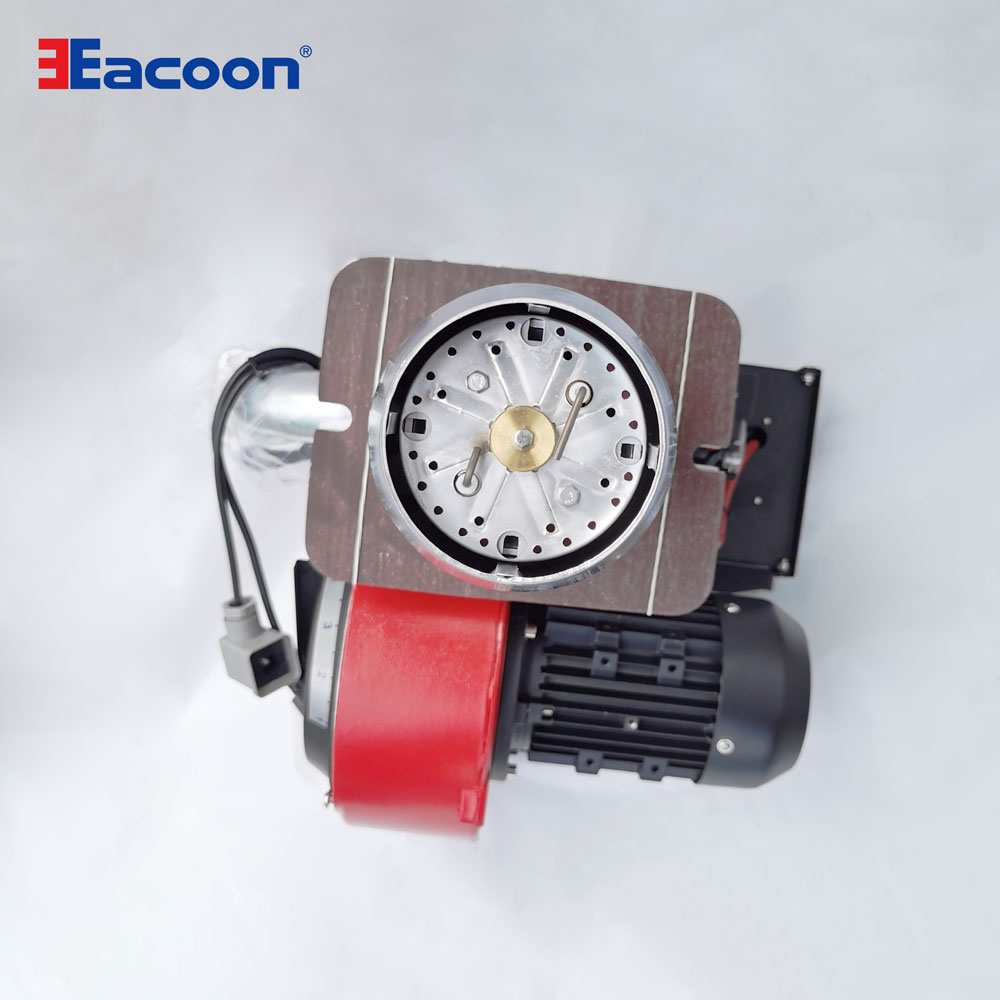
1. Turn on the power and press start. The motor does not rotate.
(1) The air pressure does not meet the conditions (1) Adjust the air pressure to the specified value
(2) The solenoid valve is not tight and there is air leakage at the joint, check and lock it (2) Clean or repair the solenoid valve pipe joint
(3) The thermostat is open (3) Check whether the thermostat is closed
(4) At least one of the conditional loops is not established (4) Check whether the water level, pressure, and temperature exceed the limits
2. The front purge is normal after starting, but the ignition does not catch fire.
(1) The burner is not grounded (1) The ground wire is connected to the circuit
(2) The solenoid valve does not work (main valve, ignition valve) (2) Replace with new one
(3) The air pressure is unstable (3) Adjust the air pressure to the specified value
(4) The air volume is too large (4) Reduce the air distribution and the opening of the damper
3. The ignition does not ignite, the air pressure is normal, and the electricity does not ignite.
(1) Ignition transformer burnt out (1) Replace with new one
(2) The high-voltage wire is damaged or detached (2) Reinstall or replace with a new one
(3) The gap is too large or too small, and the relative size of the ignition rod position (3) Readjust
(4) The electrode is broken or short-circuited to the ground (4) Reinstall or replace with a new one
(5) The spacing is inappropriate (5) Readjust
4. Turn off the flame after 5 seconds after lighting.
(1) The air pressure is insufficient, the pressure drop is too large, and the air supply flow is too small. (1) Adjust the air pressure, clean the filter, and increase the flow required by the burner.
(2) The air volume is too small, combustion is insufficient, and the smoke is thick (2) Readjust the air-fuel ratio
(3) The air volume is too large and white gas appears (3) Readjust the air-fuel ratio
5. White smoke
(1) The air volume is too large (1) Turn down the damper
(2) The air humidity is too high (2) Appropriately reduce the air volume and increase the inlet air temperature
(3) The exhaust smoke temperature is low (3) Take measures to increase the exhaust smoke temperature
6. Chimney dripping
(1) The ambient temperature is low (1) The chimney is well insulated
(2) There are many small fire burning processes (2) Reset the temperature control setting value
(3) The gas contains high hydrogen content and a large amount of peroxide generates water. (3) Reduce the air distribution volume
(4) The chimney is longer (4) The height of the chimney is reduced
(5) The exhaust smoke temperature is low (5) Increase the furnace temperature
7. The burner motor does not rotate
(1) No voltage (1) Connect the circuit
(3) Motor failure (3) Repair or replace
(4) Control circuit interruption (4) Find the disconnection point, contact or disconnect the regulator or monitor
(5) Gas delivery is interrupted (5) Open the ball valve and clean the filter
(6) Contactor does not move (6) Manual reset inspection
(7) Thermal relay is damaged (7) Replace the thermal relay
8. The burner motor runs, but stops after about 20 seconds.
(1) Air pressure switch failure (1) Replace
(2) The pressure switch is contaminated and the pipeline is blocked (2) Cleaning
(3) The solenoid valve is not sealed (only for devices with a sealing inspection device) (3) Exclude the situation of not being sealed
9. The burner motor runs, but stops in the pre-purge state after 10 seconds.
(1) The pressure switch contact is not connected to the running position (the air pressure is too small) (1) Adjust the pressure switch correctly and replace it if necessary
(2) The blower is contaminated and the heat relay operates (2) Cleaning
(3) Wrong direction of rotation of burner motor (3) Power supply commutation
10. The burner motor is running, voltage is applied to the ignition transformer, but there is no ignition, and the machine will shut down due to failure later.
(1) The distance between the ignition electrodes is too large (1) Adjust the electrode spacing
(2) Contaminated (2) Cleaned
(3) The ignition electrode or circuit is grounded (3) Eliminate the grounding and replace the damaged electrode or cable
(4) Ignition transformer failure (4) Replace ignition transformer
11. The motor is running and ignition is normal, but then it fails and shuts down.
(1) The solenoid valve does not open because the solenoid valve coil is damaged or the cable is broken. (1) Replace the solenoid valve or eliminate the circuit failure.
(2) The grounding line is disconnected (2) Recheck whether the grounding is intact
12. In a device with a sealing test device, the burner motor runs and ignites normally, but then shuts down (no fault display)
(1) The solenoid valve is not sealed (1) Exclude the situation of not being sealed
(2) Insufficient air supply (2) Increase air supply flow
(3) Filter clogged (3) Clean or replace
14. The burner motor is running and the flame is forming normally, but then it stops due to failure.
(1) The ionization current is unstable and too low (1) Change the positions of the ionization electrode and the flame plate, and check the connection lines
(2) Uneven gas-air mixing adjustment (2) Readjust the gas-air mixing
(3) The ignition spark affects the ionization current (3) The primary coil of the ignition transformer replaces the phase line and neutral line
 1. Turn on the power and press start. The motor does not rotate.

