
Part 1. Introduction to heavy oil burner
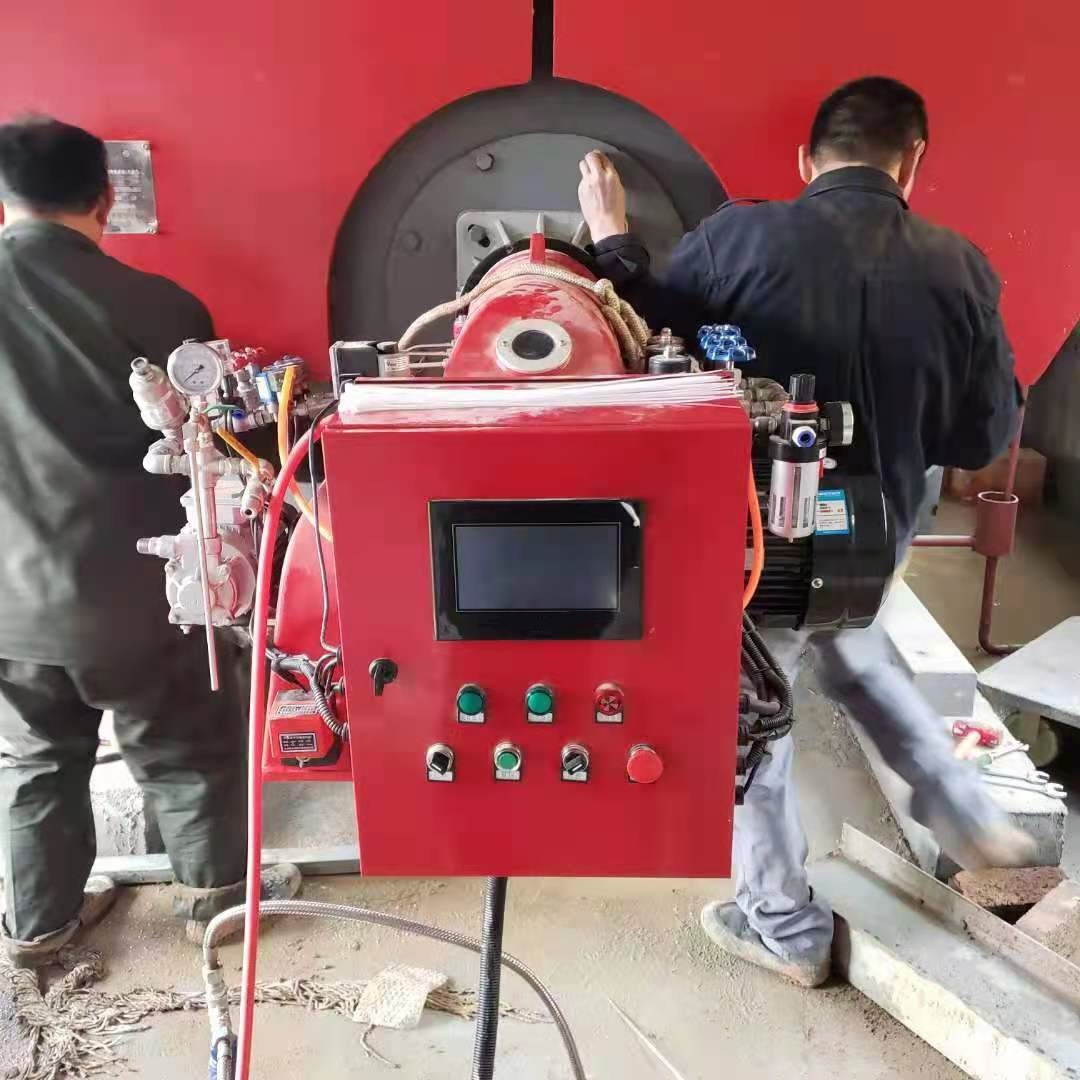
The heavy oil burner is an incineration equipment specially designed to improve the performance of heavy oil burners for heavy oils with high viscosity and poor atomization properties. It mainly consists of heavy oil storage tanks, diesel engine tanks, oil filters, heavy oil replenishment pumps, heat exchangers, light and heavy oil It consists of switching valve, fuel pump, pressure reducing valve, burner and delivery pipe.
Heavy oil enters the burner in two ways, namely swirl oil and axial flow oil, which are similar to the internal and external airflow of the burner. The swirling oil is distributed in a circular shape on the outside; the axial flow oil is a columnar irradiation flow in the middle. When it reaches the top of the spray gun head, it gathers together and enters the furnace according to the atomizing plate nozzle. The atomizing plate is divided into various specifications according to the height of the nozzle. During the heating and feeding process, atomizer sheets of different sizes are replaced according to needs. The structure of the burner at the end of the kiln is the same as that at the head of the kiln, but the ratio of internal air is much higher than that of the outside air. The difference between the oil inlet pipe and the burner at the kiln head is that there is oil inlet along the way and oil return along the way. The burner at the end of the kiln uses an 8.3 mm atomizer sheet, and the fuel injection volume is 1000014OOOL/h> the first fuel injection volume is preferably 2SOOL/h.
Part 2. Technical characteristics of heavy oil burner
1. Use a flame cover to prevent the heavy oil mixed in the air from converging at will and causing a "shame-like effect". The flame shape will be more effective, preventing the kiln head from continuing to be high-temperature, and prolonging the service life of the kiln mouth guard iron.
2. Use a flame stabilizer to maintain a stable vortex circulation system at the root of the flame and reduce the rotation of the internal air, thereby reducing the primary return air volume by more than half.
3. The external clean air blows out intermittently in a rectangular shape, and changes into an annular gap when it reaches the front of the burner. At the same time, increasing the range of the annular gap can extend the flame and increase the average temperature in the furnace.
4. The central air disperses the continuous high-temperature gas around the nozzle and pushes it forward, which not only cools the internal structure of the nozzle, but also cools the port, thereby protecting the top of the burner head and extending the service life of the heavy oil burner.
 Part 1. Introduction to heavy oil burner

