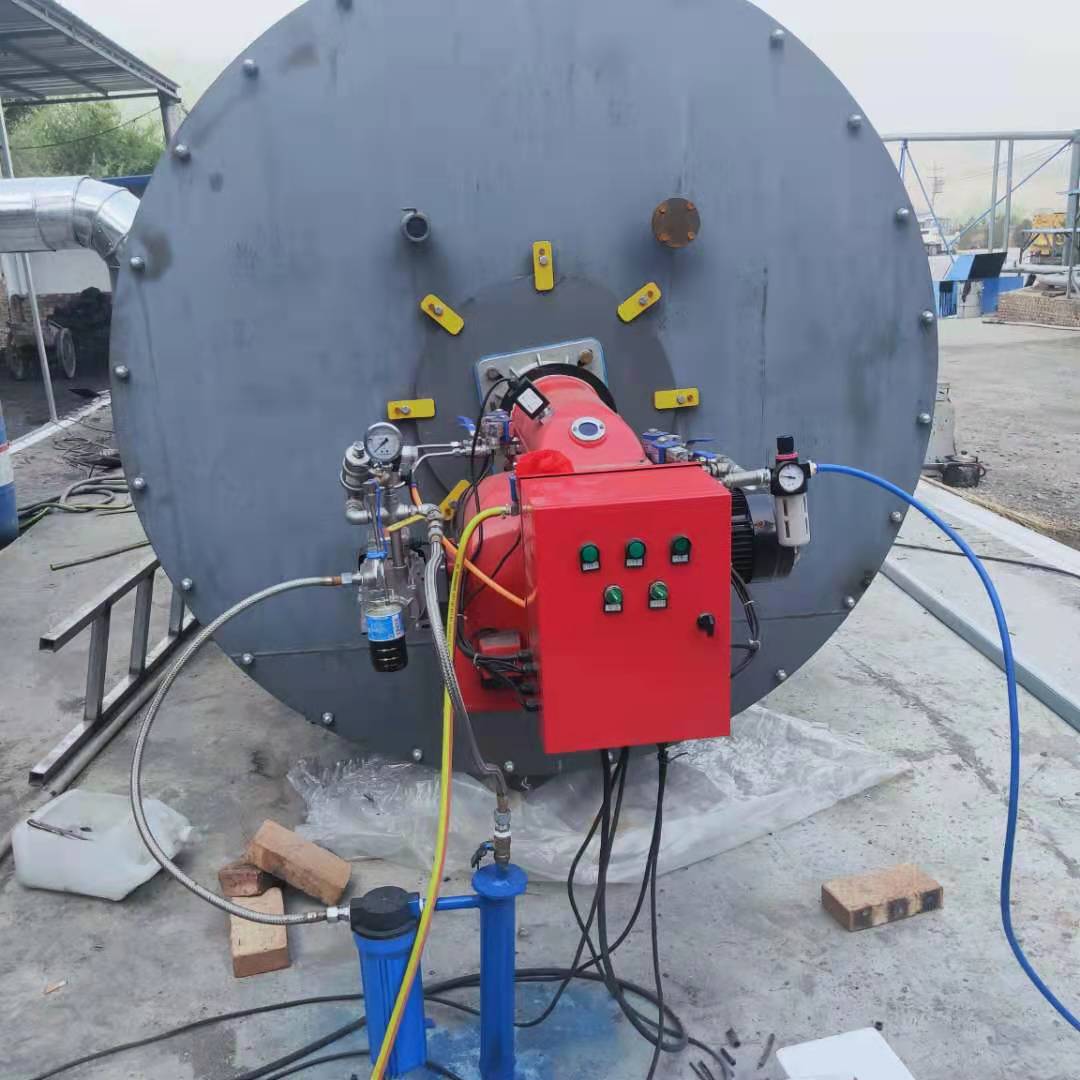
Boiler burner failure is something that every user cannot avoid, and it is also a matter of special concern and headache for users. How to reduce these failures to a lower level requires reasonable use and mastery of all countermeasures. The following content will tell you about the analysis of vibration problems of boiler burners:
 1. Alternate hot and cold sources
The boiler burner is a heat exchanger. There is a process of alternating heat source and cold source between modern boilers and burners. This process may cause vibration. Generally speaking, the temperature of hot flue gas in the furnace can be as high as 800℃ to 1000℃. The combustion-supporting gas should be high-temperature gas turbine exhaust with a temperature of 500°C. The air temperature currently used by the boiler burner is only 25°C to 50°C, which has sufficient excitation potential to produce vibration. This is also the reason why small and medium-sized boilers are particularly prone to boiler vibration.
2. Internal and external pressure differenceThe lower part of the boiler burner furnace is the combustion area, and the upper part is connected to the flue. During operation, the furnace is filled with continuously flowing combustion gases, and the entire furnace space forms an air flow field. The inner side of the furnace wall is affected by the dynamic pressure of the gas flow field in the furnace, and the outer side is affected by atmospheric pressure. When the air flow pressure in the furnace fluctuates, the furnace wall will be excited to vibrate. Actual production is affected by large fluctuations in the gas pressure of the boiler burner, resulting in incompetent combustion. Stable, large fluctuations in furnace negative pressure, and frequent changes in pressure difference between inside and outside cause vibration of the boiler wall.
3. Insufficient furnace wall stiffnessFurnace wall vibration caused by combustion dynamics is inevitable, which requires the furnace wall to have a certain stiffness. Paper format. The function of the rigid beam is to protect the furnace and flue from damage under the furnace operating pressure or deflagration conditions of the boiler burner, that is, by increasing the stiffness of the furnace wall by adding rigid beams. If the stiffness of the rigid beam is insufficient or the installation does not meet the design requirements, severe furnace wall vibration will occur.
4. The air volume is too largeThe amount of air can cause ignition delays and knocking.
Responses:
1. Change the natural frequency of the boiler burner and the frequency of the vortex generated by combustion around the burner throat;
2. In order to prevent the flame swing from stimulating low-frequency vibration of the smoke column, the burner structure and combustion conditions need to be improved. First, it is necessary to ensure that the ignition front of the flame is stable, the combustible gas jet expands into a hollow cone-shaped air flow, and entrains enough high-temperature smoke to return;
3. Change the natural vibration frequency of combustion in the furnace, such as transforming double-sided water-cooled walls, large screen plates, horizontal superheaters, etc.
4. Improve the structure of the air conditioner and bellows, such as adding a combustion stabilizer, air balance baffle, etc.;
5. Reasonably design and arrange the position of the flue gas recirculation inlet and the adjustment and control methods to prevent the occurrence of abnormal phenomena such as flue gas "short circuit";
6. Make the rotation directions of the boiler burners correspond to each other, thereby generating a common, mutually parallel, uniform updraft flow field.
 1. Alternate hot and cold sources

